
Plumbing Warning Signs Most CT Homeowners Miss Before Winter

Almost no plumbing system fails without warning. It leaks quietly, runs a little longer, sounds a little different, or costs a few more dollars a month for weeks before anything dramatic happens. The problem is that most of those warnings are easy to live with — until the first hard freeze turns a small weakness into a burst pipe on a Sunday night.
This is the list of things Connecticut homeowners usually do not know to look for. Most take a few minutes and nothing more than a flashlight.
1. Find your main shutoff — and actually turn it
This is the single most valuable thing on this page. In a real emergency, the minutes between "water everywhere" and "water off" decide whether you are drying a floor or replacing one.
Find the main shutoff now. In most Connecticut homes it is in the basement on the street-facing wall, near the water meter. Then do the part people skip: turn it off, then back on. Valves that have not moved in fifteen years seize in place, and you do not want to discover that with water rising. If it will not budge, or it drips after you turn it, have it replaced before winter. It is a small job now and an expensive one during a flood.
While you are there, make sure everyone in the house knows where it is. If a pipe does let go, our burst pipe emergency steps are worth reading before you need them.
2. The water meter test that finds hidden leaks
A leak inside a wall or under a slab can run for months without a stain. Your meter will tell you anyway.
Turn off every faucet, appliance, and ice maker. Read the meter — most have a small triangular or star-shaped leak indicator that spins with even tiny flow. Wait two hours with no water used, then read it again. If anything moved, water is going somewhere it should not.
That is the point to call for leak detection and repair rather than guessing. Hidden leaks are also what makes spring thaw damage show up months after the cold caused it.
3. Water pressure that is quietly destroying your fixtures
Most homeowners think high water pressure is a good thing. Over about 80 psi, it is not — it shortens the life of your water heater, washing machine hoses, toilet fill valves, and every supply line in the house.
The signs are easy to miss because they seem unrelated:
- A bang or thud in the walls when a faucet shuts off or the washer changes cycle
- Whistling or humming from pipes when water runs
- Toilets that run on their own, or fill valves you keep replacing
- Faucet aerators that spray sideways
- Showerheads that drip long after shutoff
A hose bib pressure gauge costs about twelve dollars at any hardware store. Screw it onto an outside spigot and read it. If it is over 80 psi, your pressure reducing valve has likely failed or was never set — a common find in older New Haven County homes, and a cheap fix compared to what high pressure does over a winter.
4. What your water heater is telling you
Water heaters are the most predictable failure in the house, and the most ignored. Winter is when they work hardest: incoming water is colder, so the burner or elements run longer to reach the same temperature. A tank that was coping in August often quits in January.
Signs worth acting on:
- Rumbling, popping, or knocking during a heating cycle. That is sediment — the tank is boiling water underneath a mineral layer. Here is what knocking actually means.
- Hot water running out sooner than it used to. Sediment takes up volume, so a 50-gallon tank stops behaving like one.
- Rusty or metallic-smelling hot water when cold water runs clear. Usually the anode rod is spent and the tank lining is next.
- Any moisture, rust, or mineral crust at the base, or a drip from the discharge pipe near the floor. A slow weep is the stage before a failure — the cost of ignoring it is not subtle.
- Age. Most tanks last 8 to 12 years in Connecticut. The manufacture date is usually encoded in the first four digits of the serial number on the label.
If two or more of those are true, get water heater service scheduled before the cold snap, not during it. Nobody replaces a water heater calmly in January.
5. Outdoor plumbing: the mistake almost everyone makes
If a garden hose is still attached to your spigot, go disconnect it now. It is the most common cause of a burst pipe we see in Connecticut, and it is completely avoidable.
Here is why it matters even with a frost-free spigot: the frost-free design only works if water can drain back out of the pipe. A connected hose holds water against the valve seat, inside the wall, where it freezes and splits the pipe. You often will not know until spring, when you turn the water on and it pours into the basement instead.
So before the first freeze: disconnect and drain every hose, shut off the interior valve feeding each spigot if you have one, and open the outside faucet to let the line drain. Then watch that spigot next time you use it — a hose bib that only leaks when the hose is running is already damaged inside the wall.
The same goes for irrigation systems, outdoor kitchens, and pool lines. If it holds water and lives outside, it needs to be drained.
6. Which drain is slow tells you how serious it is
Homeowners tend to treat every slow drain the same way. The pattern matters more than the speed:
- One fixture is slow, everything else is fine. Local clog in that branch line. Annoying, not urgent.
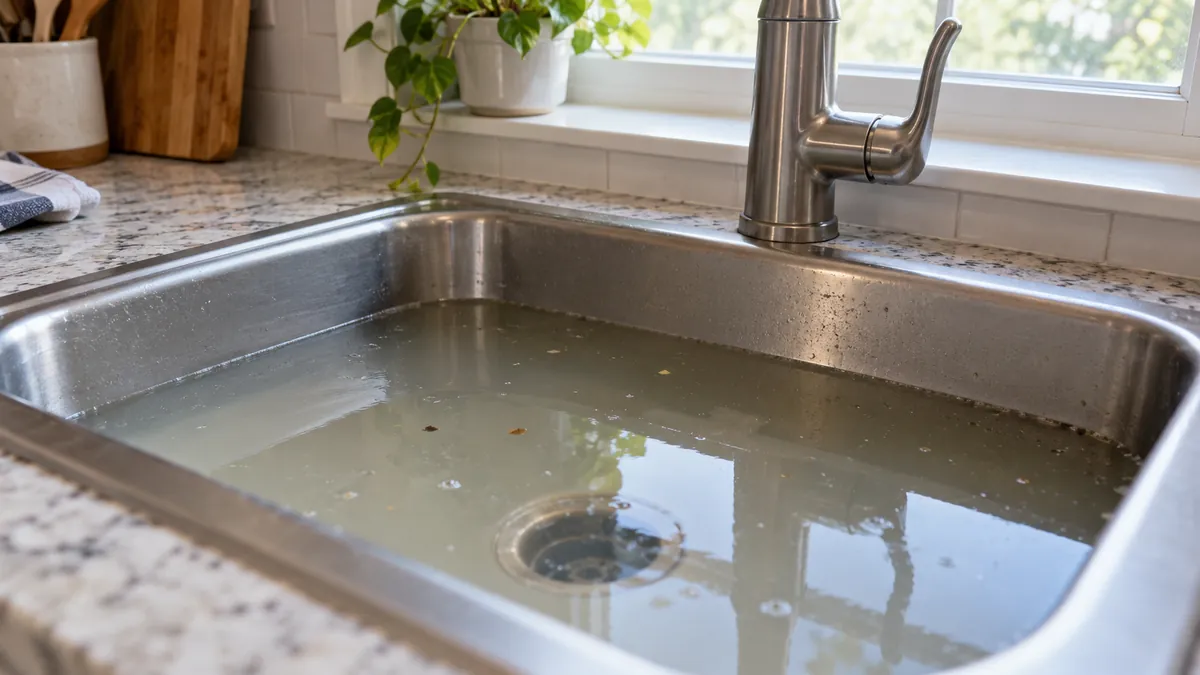
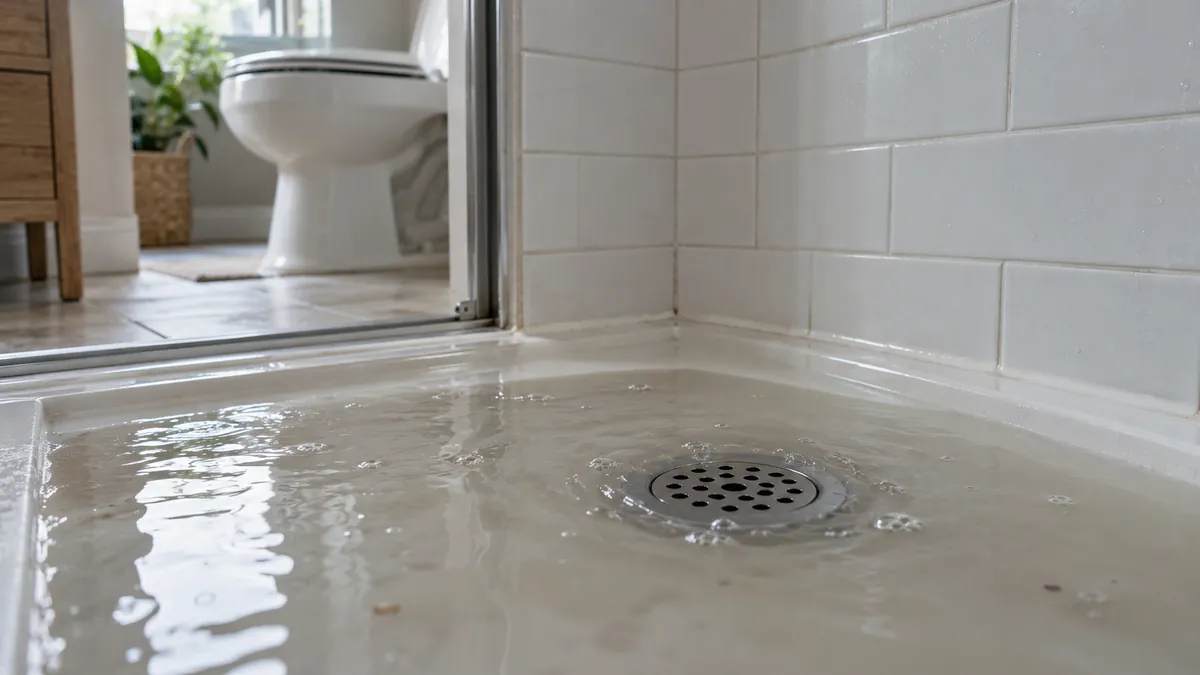
- Several fixtures are slow, or the lowest drains in the house back up first. That points at the main line, and it is the one to take seriously.
- The toilet gurgles when the washing machine drains, or the tub burbles when you flush. Air is being pushed through standing water in a partially blocked main. This is a warning, usually weeks before a full backup.
- Clogs that keep coming back in the same drain after you have cleared them. Something structural is holding debris — grease buildup, a belly in the pipe, or roots.
Anything on the main line side of that list is worth a camera look rather than another bottle of drain cleaner. Professional drain cleaning clears the line, and hydro jetting scours the walls of the pipe so it stays clear. If the camera finds a broken or root-invaded line, trenchless sewer repair can often fix it without excavating the yard.
7. Smells that are telling you something specific
A sewer smell is not just unpleasant, it is information. Every drain has a trap holding a small plug of water that blocks sewer gas. When a drain goes unused — a guest bathroom, a basement floor drain, a laundry sink — that water evaporates and the barrier is gone.
Fix it first by pouring a couple of quarts of water down the drain. If the smell comes back within a few days, the trap is not the problem and you may be looking at a venting issue or a crack in the drain line.
A rotten-egg smell in the hot water only is different: that is bacteria reacting with the anode rod in your water heater, not your drains.
8. Know where your house actually freezes
Pipes rarely freeze in the middle of a heated house. They freeze in the predictable weak spots, and every Connecticut home has a few:
- A kitchen sink on an exterior wall — especially with the cabinet doors closed on a cold night
- Bathrooms over an unheated garage, porch, or breezeway
- Additions and converted spaces where the plumbing runs through a wall with less insulation than the rest of the house
- Crawlspaces and unheated basements, particularly near foundation vents
- Any pipe running through an attic or along a rim joist
Walk those spots on a cold morning and put your hand on the pipe. A pipe that is noticeably colder than the others is the one that will freeze first. That is where insulation, a cabinet door left open, or a heat cable actually pays off. More detail here: how to keep frozen pipes from bursting.
9. Test the sump pump before the ground freezes
Fall is the right time, because a pump that fails in a February thaw fails while the discharge line is still frozen.
Pour a bucket of water into the pit. The float should rise, the pump should start, and the water should move out — not back in. Then check that the discharge line outside is clear and angled away from the foundation. If the pump hums without pumping, cycles rapidly, or runs constantly, it is telling you it is near the end. Sump pump failure is the number one emergency call in New Haven County for a reason, and a basement drain backing up after rain is often the first hint.
10. The quiet signs that something is already wrong
These are the ones people notice and then forget about:
- A water bill that crept up without a change in habits. A running toilet can waste hundreds of gallons a day silently.
- A toilet that refills by itself every so often with nobody using it. The flapper is leaking. It is a cheap toilet repair and a real amount of water.
- A warm spot on a basement or ground floor, or the sound of running water when everything is off. That can mean a leak in a hot water line under the slab.
- Faint staining or a hairline ring on a ceiling below a bathroom. Old stains still matter — they mean water got there once.
- White chalky buildup on a pipe or joint. That is mineral residue from a slow weep that keeps drying. The drip is small now.
The rule of thumb: anything that changed — a new sound, a new smell, a slower drain, a higher bill — is worth ten minutes of attention in October and a lot more than that in January.
What a fall plumbing checkup covers
If you would rather have someone go through the whole system, that is what a fall checkup is. A licensed plumber checks supply lines and shutoffs, water pressure, the water heater and its safety valve, drains and the main line, exposed and vulnerable pipes, outdoor spigots, and the sump pump — then tells you what needs attention now, what can wait, and what is fine.
You get the findings in writing with upfront flat-rate pricing before any work starts, so there is no pressure and no surprise number at the end. Current special offers apply to the work if you decide to move forward, and every repair is backed by our Done Right Promise.
If something has already gone wrong — water actively leaking, no heat to the water heater, a backed-up main — that is an emergency plumbing call, available 24/7, not a checkup.
Serving South Central Connecticut
Mr. Rooter Plumbing helps homeowners in New Haven, Branford, North Branford, Guilford, Madison, Hamden, Wallingford, Cheshire, Milford, Middletown, and towns across the region. You can see everything we handle on our plumbing services page.
FAQs
How do I know if I need a plumbing inspection?
If you have noticed any change — a slower drain, a new sound in the pipes, less hot water, a higher water bill, or a damp spot — that is reason enough. Homes over 30 years old, homes with well water or hard water, and homes you have recently bought are worth checking even with no symptoms.
What is the most common plumbing problem in Connecticut winters?
Frozen and burst pipes, and most of them trace back to two avoidable things: a garden hose left connected to an outdoor spigot, and an uninsulated pipe running through an unheated space like a garage ceiling or crawlspace.
Can I check for a hidden water leak myself?
Yes. Shut off all water in the house, read your water meter, wait two hours without using any water, and read it again. Any movement in the leak indicator means water is escaping somewhere. Finding where it is going is the part worth calling a plumber for.
Why does my water heater make a popping or rumbling noise?
Sediment has settled on the bottom of the tank and water is boiling underneath it. It makes the heater work harder, costs more to run, shortens the tank's life, and often means the unit is due for a flush or is nearing replacement.
Is it normal for a toilet to run by itself occasionally?
No. A toilet that refills on its own when nobody has flushed it has a leaking flapper or fill valve. It is an inexpensive repair, but it can waste hundreds of gallons a day until it is fixed.
When should I schedule a fall plumbing checkup in Connecticut?
Late September through early November, before the first hard freeze. Scheduling ahead of the cold means any repair happens on your timeline instead of during an emergency, when availability is tightest.
Our Services
From drain cleaning to water heater repair, we've got your plumbing covered across South Central Connecticut.

Ready to Fix Your Plumbing?
Get a free, no-obligation estimate from our licensed local plumbers. Available 24/7 for emergencies.