
What a Water Heater Checkup Actually Does — and What It Saves You
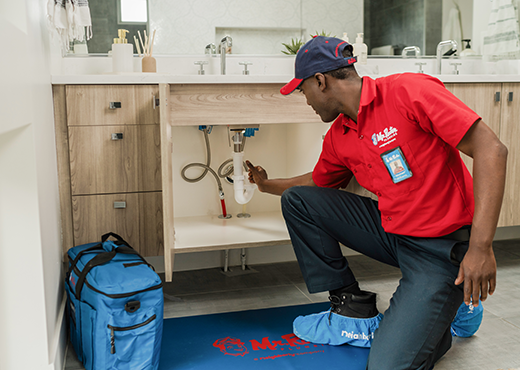
"Get your water heater checked" is easy advice to ignore, because it sounds like the kind of thing that exists to sell a service call. So here is the honest version: what a checkup actually involves, what it genuinely prevents, and what it does not.
What a plumber actually does during a checkup
It is not a glance and a thumbs up. On a tank unit, a proper check covers:
- Flushing sediment from the tank. Minerals settle out of the water and collect on the bottom. On a gas heater that layer sits between the burner and the water, so the burner has to run longer to do the same job. Flushing removes it.
- Inspecting the anode rod. This is the part almost nobody knows about. It is a sacrificial metal rod that corrodes instead of your tank. Once it is consumed, the tank lining is what corrodes next. Replacing a spent rod is inexpensive; replacing a rusted-through tank is not.
- Testing the temperature and pressure relief valve. The T&P valve is the safety device that prevents a tank from becoming dangerous under pressure. A valve that is stuck with mineral buildup is a genuine hazard, and it is invisible until someone tests it.
- Checking the thermostat and temperature setting. 120°F is the widely recommended setting — hot enough for household use, cooler than the scalding range, and cheaper to maintain than 140°F.
- Inspecting the burner and venting, or the elements and wiring. On gas units this includes looking at the flame and confirming combustion gases are venting properly, which is a safety issue as much as a performance one.
- Checking connections, the expansion tank, and the water pressure feeding the unit. High household pressure quietly shortens a water heater's life, and a waterlogged expansion tank stops protecting it.
- Looking for the early signs of tank failure — rust at the fittings, mineral crust from a slow weep, moisture under the base, discoloration in the hot water.
What it actually saves you
Three things, in order of how much money is involved.
1. It turns an emergency into a decision
This is the big one, and it has little to do with the heater itself. A tank that fails outright can put 40 to 50 gallons of water onto the floor — and in most Connecticut homes, the heater is in a basement, often a finished one, or in a garage or utility closet with drywall around it. The water damage frequently costs more than the heater.
A checkup finds the weep, the rust ring, or the corroded fitting weeks or months before that. Then you are choosing a replacement on a Tuesday with quotes in hand, instead of at 9pm in January with water spreading and no leverage. We have written about what that postponement costs.
2. It keeps the tank doing its actual job
Sediment does not just make noise. It takes up volume the tank was designed to fill with hot water, which is why "we run out of hot water faster than we used to" is such a common complaint in hard-water areas. Flushing restores that capacity. The knocking and rumbling people learn to live with is the sound of water boiling underneath that layer — the heater working harder than it needs to.
3. It catches the cheap repair before it becomes the expensive one
A failing element, a tired thermocouple, or a spent anode rod are all modest repairs on their own. Left alone, an element failure becomes a cold shower on the coldest morning of the year, and a spent anode rod becomes a corroded tank. The repair does not get cheaper by waiting — it usually gets replaced by a bigger one.
What a checkup does not do
It will not make a fourteen-year-old tank last forever. Maintenance helps a water heater reach the upper end of its expected life — most tanks last 8 to 12 years in Connecticut — but it does not reset the clock. If a tank is already corroding, a flush is not going to save it.
What you get in that case is still worth having: a clear, honest answer about how much life is realistically left, so you can budget for the replacement instead of being surprised by it. A plumber who tells you your heater is fine when it is not has cost you far more than the visit.
Who gets the most out of it
A checkup pays off most if any of these describe your home:
- The heater is 8 years old or more, or you have no idea how old it is
- You are on well water or hard water — mineral content is what drives sediment and anode wear
- The heater sits above or next to finished space, where a failure damages more than a slab floor
- You have never had it flushed, or cannot remember the last time
- You have noticed any change — less hot water than you used to get, new noise, a metallic smell, a damp spot
- It is a second home or rental where a leak can run for days before anyone notices
Best timing: fall, before the first hard freeze. Incoming water is much colder in a Connecticut winter, so the heater works considerably harder — which is exactly when a marginal unit gives out. Here is why no-hot-water calls spike in cold weather.
What it costs and how we handle it
You get the price before anything starts. Our water heater service is quoted with upfront flat-rate pricing, so a checkup that turns up a problem comes with a written number for the fix and no pressure to decide on the spot. Findings are explained in plain terms — what needs attention now, what can wait a season, and what is simply fine.
Every repair is backed by our Done Right Promise, current special offers apply to the work, and we are licensed and insured in Connecticut. If the heater has already failed, that is an emergency call instead, available 24/7.
A water heater check is part of a full fall plumbing checkup, which covers the rest of the system too — the warning signs most homeowners miss are worth reading alongside this.
Serving South Central Connecticut
Mr. Rooter Plumbing services water heaters in New Haven, Branford, North Branford, Guilford, Madison, Hamden, Cheshire, Wallingford, Milford, Middletown, and towns across the region.
FAQs
How often should a water heater be serviced?
Once a year is the general recommendation for a tank unit, and more often if you are on well water or notably hard water. Tankless units also need periodic descaling, on a schedule that depends on water hardness and use.
Does flushing a water heater really make a difference?
Yes, if there is sediment to remove. It restores tank capacity that minerals were occupying and stops the burner from working through an insulating layer. On a tank that has gone many years without a flush, it can also reveal an existing problem — which is useful information, not a reason to skip it.
What is an anode rod and why does it matter?
It is a sacrificial metal rod inside the tank that corrodes in place of the tank lining. When it is used up, the tank itself starts corroding. Checking and replacing it is one of the few maintenance items that genuinely affects how long a water heater lasts.
Can a water heater checkup prevent a leak?
It cannot guarantee one will never happen, but it reliably catches the early stage — rust at a fitting, mineral crust from a slow weep, moisture at the base — while it is still a planned repair rather than a flooded basement.
What temperature should my water heater be set to?
120°F is the widely recommended setting. It is hot enough for normal household use, reduces the risk of scalding, and costs less to maintain than a higher setting. Some households with specific needs set it higher deliberately.
Is it worth servicing an old water heater?
If it is over ten years old, the value of the visit is mostly the honest assessment — how much life is left and whether it is showing signs of tank failure — so you can plan the replacement instead of reacting to it.

Our Services
From drain cleaning to water heater repair, we've got your plumbing covered across South Central Connecticut.

Ready to Fix Your Plumbing?
Get a free, no-obligation estimate from our licensed local plumbers. Available 24/7 for emergencies.