
Toilet Backing Up Into the Shower? Causes and What to Do
Illustrative photo.
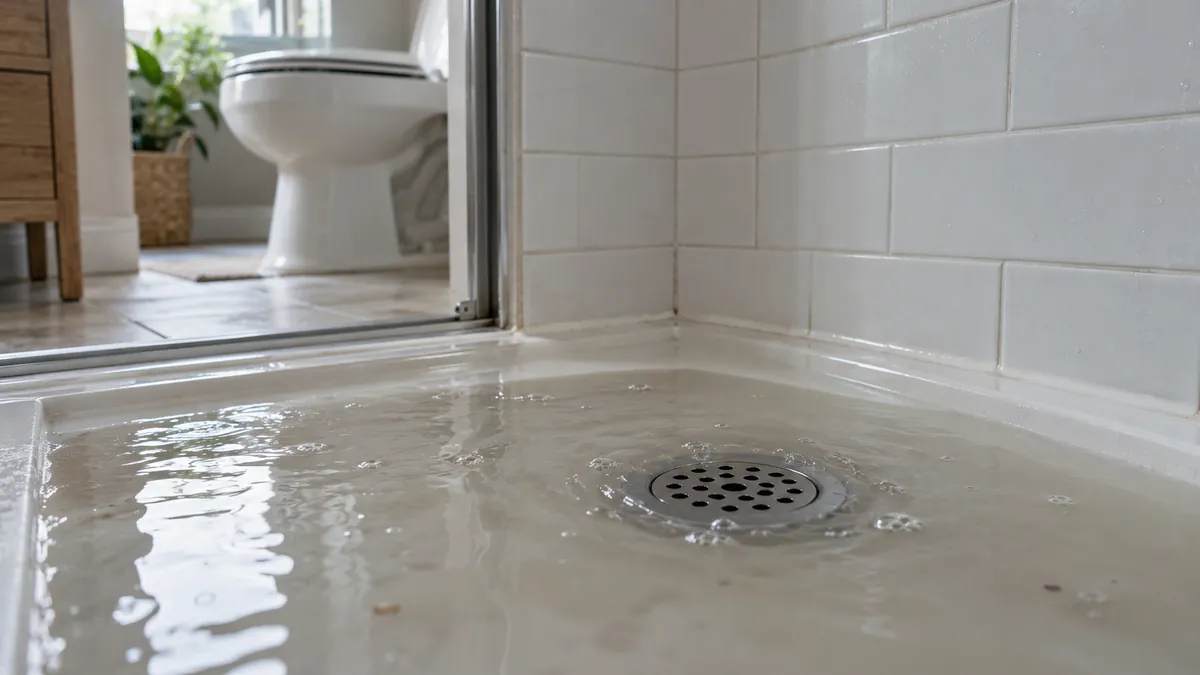
If flushing the toilet sends water into your shower, stop flushing and stop using water in that bathroom. A blockage in a shared drain may be forcing wastewater toward the shower, which is a lower opening. If other drains are affected too, the problem may be farther along the main sewer line.
You do not need to know which pipe is blocked before asking for help. Treat the water as contaminated, keep people away, and arrange a professional inspection rather than repeatedly testing the toilet.
What You Should Do First
- Stop adding water. Do not flush again. Pause showers, laundry, dishwashing, and other water use if several drains are backing up.
- Keep children and pets out. Avoid contact with the water, even if it looks fairly clear.
- Stay away from electrical hazards. Do not enter water near outlets or equipment. If power needs to be shut off, do so only from a dry, safely accessible location; otherwise get emergency help.
- Record what happened from a dry spot. Note whether the backup followed a toilet flush, laundry cycle, or heavy rain. A photo can help explain the situation.
- Call for drain or sewer service. Describe the cross-fixture backup, whether water is still rising, and which drains are affected.
Do not keep flushing to see if it clears. More water can turn a contained backup into an overflow.
Why Water Comes Up Through the Shower Drain
Your toilet and shower may connect to the same drain farther downstream. When wastewater cannot pass a blockage, it can escape through another fixture instead.
- One bathroom is affected: the obstruction may be in that bathroom's shared drain.
- Several rooms or the lowest drains are affected: a main-line blockage becomes more likely.
- The problem keeps returning: buildup, roots, or a damaged pipe may need investigation.
These are clues, not a diagnosis. Homes connected to septic systems can also have backups that need a different investigation. Tell the technician which system your home uses, if you know.
What Can You Safely Check Yourself?
Look and listen from a dry area. Check whether other fixtures have already shown slow drainage, gurgling, or standing water; you do not need to run them to find out.
A little hair on a shower strainer can slow that shower. It usually does not explain toilet wastewater coming up through it, so removing visible hair is not a solution to this cross-fixture problem.
What to Avoid
- Do not pour chemical drain cleaner into the toilet or backed-up shower.
- Do not mix cleaning chemicals or plunge water that contains drain cleaner.
- Do not open a sewer cleanout yourself; backed-up wastewater may release from it.
- Do not rent a powered drain machine or attempt pressure washing inside the line.
- Do not treat sewage cleanup as ordinary bathroom cleaning. Ask about appropriate cleanup after the source is fixed.
When to Call a Professional
A toilet-to-shower backup is a reason to call promptly. Get urgent help if wastewater is rising, spreading onto floors, affecting multiple fixtures, or reaching electrical equipment. A single slow shower without cross-fixture backup can usually be assessed through a scheduled appointment, provided it is not overflowing.
If backups began during heavy rain or neighbors report the same problem, contact your local sewer authority as well. The plumber can help determine whether the obstruction is on your property's line or farther downstream.
What Happens During the Inspection?
The technician asks when the backup started, checks the affected fixtures, and looks for a suitable access point. Depending on the blockage and pipe condition, the next step may be professional drain cleaning or a sewer camera inspection when the line is accessible.
A camera can help distinguish a recurring blockage from a pipe defect. Cleaning may restore flow, while a damaged line may need sewer repair; neither should be assumed from the symptom alone.
Why the Final Price Needs a Diagnosis
Clearing a bathroom drain and repairing a damaged main sewer line involve different work. A phone conversation helps explain urgency, but it often cannot establish an accurate final repair price.
Mr. Rooter CT evaluates the issue, explains the recommended work, and provides an upfront, flat-rate quote for your approval. You can ask what is included before authorizing service. Flat-rate pricing means an agreed price for defined work, not one price for every plumbing problem.
Frequently Asked Questions
Can I use another bathroom while the shower is backing up?
If the blockage is in the main line, another bathroom can add water to the same backup. Pause household water use and ask the technician before using other fixtures.
Will plunging the toilet fix water coming up in the shower?
A plunger may help an isolated toilet clog, but cross-fixture backup suggests a blockage farther along a shared drain. Avoid repeated plunging when contaminated water is backing up elsewhere.
Does this automatically mean I need a new sewer line?
No. A removable blockage and a damaged pipe can produce similar symptoms. Inspection helps determine whether cleaning or repair is appropriate.
Drain Still Backing Up? Schedule a Professional Inspection.
Tell Mr. Rooter Plumbing of South Central Connecticut which fixtures are affected so we can assess the problem and explain your options.
Related reading: why a drain keeps clogging after snaking.

Our Services
From drain cleaning to water heater repair, we've got your plumbing covered across South Central Connecticut.

Ready to Fix Your Plumbing?
Get a free, no-obligation estimate from our licensed local plumbers. Available 24/7 for emergencies.