
The Real Cost of a Clean Yard: Why Trenchless Sewer Repair is the Smart Investment for CT Homeowners
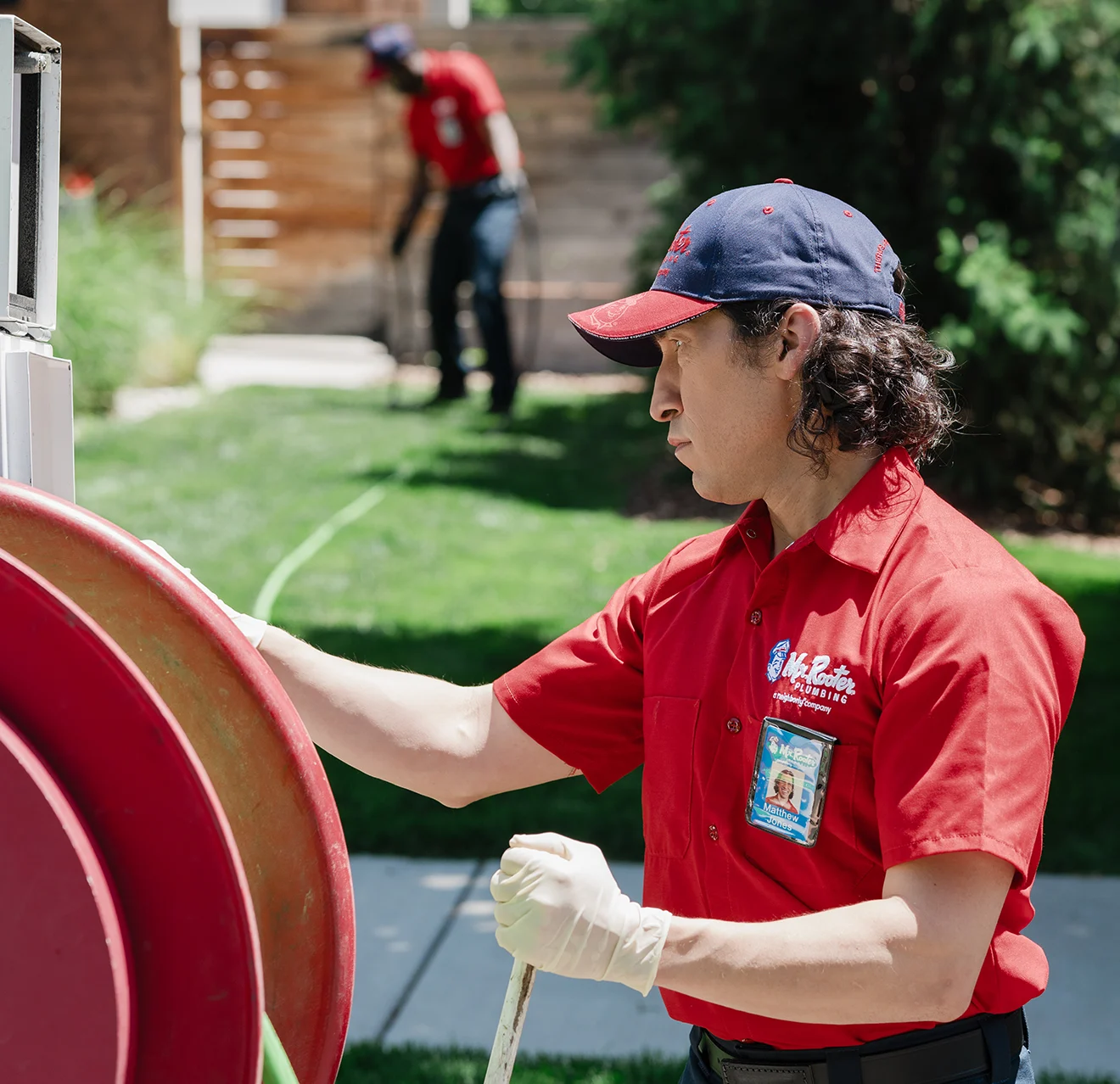
Trenchless sewer repair fixes damaged underground pipes without excavating your yard. Using a flexible epoxy liner inserted through a small access point, the method works in Connecticut’s rocky glacial soil and aging pipe systems — and costs less overall once you factor in driveway replacement and landscaping restoration that traditional methods require.
The Old Way Left a Mark — Literally
If you’ve ever watched a crew dig up a Connecticut yard to replace a sewer line, you already know the aftermath. A six-foot-deep trench carved straight through your lawn. Stone walls your grandfather built, dismantled in an afternoon. A bluestone patio, cracked and stacked to the side. And that mature oak tree you’ve watched grow for thirty years? Its root system cut through without a second thought.
Traditional sewer excavation wasn’t designed with your property in mind. It was designed to get a machine from Point A to Point B, and your yard was simply in the way.
Here in South Central Connecticut, this process is especially disruptive for two reasons that don’t show up in any contractor’s brochure.
First, our soil. This region sits on some of the most stubborn glacial till in New England — dense, rocky ground packed with boulders left behind by retreating ice sheets thousands of years ago. Digging through it isn’t just messy. It’s expensive, time-consuming, and unpredictable. Crews routinely hit ledge rock or large cobble that sends costs spiraling well beyond the original estimate.
Second, our winters. Connecticut’s freeze-thaw cycle is one of the most punishing forces acting on underground infrastructure. When temperatures plunge in January and climb again in March, the ground shifts — contracting, heaving, and settling in ways that open up hairline cracks at pipe joints, separate connections, and accelerate the collapse of already-aging lines. This seasonal ground movement is one of the primary reasons traditional pipe joints fail in our region, and it’s a problem a patched or replaced segmented pipe will face again and again. A seamless CIPP liner, by contrast, has no joints to crack and no seams to separate. It moves with the ground rather than fighting it.
The Pipe Problem Hidden Under Half of CT’s Older Neighborhoods
Many homeowners in New Haven, Branford, and Hamden are sitting on infrastructure their house’s previous owners never thought twice about — and that’s now quietly failing. Homes built between the 1930s and 1960s were commonly plumbed with one of two materials: Orangeburg pipe — a compressed tar-paper and pitch product that was never meant to last more than 50 years — or traditional clay tile pipe, which is brittle, joint-heavy, and highly vulnerable to root intrusion. Both are well past their design life. Both are actively degrading under streets and yards across South Central CT right now.
Orangeburg, in particular, is a ticking clock. The material absorbs moisture over time, softens, and collapses inward — often into an oval or figure-eight shape that no amount of root clearing can fix. If your home was built before 1970 and you’ve never had a camera inspection, there’s a real chance your sewer line is made of one of these materials. Knowing that is the first step to fixing it before it becomes a sewage emergency.
And then there’s the tree root problem. Connecticut’s beloved Oak and Sugar Maple trees — the same ones painting Hamden and North Branford hillsides red and gold every October — are relentless. Their roots follow moisture underground with single-minded precision, finding the smallest crack in a clay or Orangeburg sewer pipe and expanding until the line is fully blocked. Sewer line tree root removal is one of the most common calls we receive from homeowners across New Haven County, and left untreated, those roots don’t just slow your drains. They collapse your line entirely.
The old answer was always the same: dig it up. But it doesn’t have to be.
What Trenchless Sewer Repair Actually Is (And Why CT Homeowners Are Choosing It)
Trenchless sewer repair — sometimes called no-dig sewer line repair or CIPP (Cured-In-Place Pipe) lining — solves the same problem without turning your property into a construction zone.
Instead of excavating the full length of a damaged pipe, a trained technician accesses the line through one or two small entry points. A flexible, resin-saturated liner is then inserted into the existing pipe, pressed against the interior walls, and cured into a seamless, jointless new pipe — right inside the old one. The damaged host pipe becomes the mold. What comes out the other side is a structurally sound line with no joints, no seams, and no entry points for roots or groundwater — designed to last 50 years or more.
No trench. No backhoe. No destroyed landscaping.
This technology is why homeowners searching for trenchless sewer repair in New Haven, CT are choosing it over traditional methods at a growing rate. Once you understand how it works — and what the true cost comparison looks like — it’s hard to argue with.
How the Process Works: 4 Steps from Diagnosis to Done
Step 1: HD Video Camera Inspection
Before anything else, we send a high-definition camera through your sewer line. This isn’t guesswork. The camera shows us exactly where the damage is — a root intrusion at 40 feet, a crack at a pipe joint, a collapsing section of Orangeburg, a failed clay tile connection — and gives us precise measurements. You see what we see, in real time, on a monitor. No surprises, no unnecessary work.
This inspection is also how we confirm that your line is a good candidate for trenchless repair. Most are. Some severely collapsed sections may require spot excavation, and we’ll tell you that honestly upfront.
Step 2: HydroScrub® Jetting
A liner can only bond to a clean pipe. Before installation, we use Mr. Rooter’s HydroScrub® Jetting — high-pressure water jetting that scours the interior of your existing pipe, blasting out roots, grease buildup, sediment, and decades of debris. This step is critical. It ensures the epoxy liner makes full contact with the pipe wall and cures with a proper bond. It also handles your sewer line tree root removal in a single, thorough pass — clearing the line completely before the liner ever goes in.
Step 3: Epoxy Liner Installation (CIPP)
This is where the technology does its work. A soft, resin-saturated liner — sized precisely to your pipe’s diameter — is pulled or inverted into position through the access point. Once in place, it’s expanded outward to press firmly against the pipe walls. Whether your damaged line runs beneath a driveway in Branford, under a stone patio in Hamden, or through the rocky backyard of a colonial in North Branford, the liner conforms to the pipe’s existing path without disturbing what’s above it.
CIPP sewer lining effectively creates a pipe within a pipe — eliminating cracks, root entry points, and joint gaps in a single installation. And because the finished liner is seamless, it gives Connecticut’s freeze-thaw cycle nothing to work with. There are no joints to crack open come March. No connections to shift. Just a single, continuous tube bonded to the old pipe from one end to the other.
Step 4: Curing, Permitting, and Final Inspection
We handle the details most homeowners don’t want to think about — including the paperwork. Mr. Rooter manages the local Connecticut municipal permits required for sewer line work on your behalf, so you never have to navigate town hall or figure out which form goes where. Once permits are in order, curing is completed with hot water, steam, or UV light depending on the liner system used. We then run the camera through one final time to confirm full coverage, proper fit, and a clean flow path. When we say it’s done, it’s done right.
The Hidden Cost Comparison: Where Traditional Repair Really Hits Your Wallet
This is the number most plumbing quotes leave out. When a contractor gives you a price for traditional sewer line replacement, that number covers the plumbing work. It does not cover what comes next.
Consider a typical scenario: a 60-foot sewer line running from a home in New Haven under a concrete driveway to the city main.
Traditional Excavation — The Full Picture
Cost CategoryEstimated RangePlumbing / pipe replacement$4,000 – $7,000Concrete driveway restoration$3,500 – $6,000Professional landscaping restoration$1,500 – $3,500Tree removal (if root damage is severe)$800 – $2,000Total Project Cost$9,800 – $18,500
These are representative estimates for illustrative purposes. Your actual costs will vary based on pipe length, access, soil conditions, and restoration scope.
Trenchless CIPP Lining — The Full Picture
Cost CategoryEstimated RangeTrenchless sewer repair (full service)$6,000 – $12,000Driveway restoration$0 – minimalLandscaping restoration$0 – minimalMunicipal permit handlingIncludedTotal Project Cost$6,000 – $12,000
The trenchless plumbing service costs more than the plumbing labor alone in a traditional job. But the total project cost is lower — often significantly — because you’re not writing a separate check to a concrete company and a landscape crew afterward. You’re not reseeding a lawn. You’re not rebuilding a retaining wall. Your yard looks the same on Tuesday as it did on Monday.
For homeowners in Branford, Hamden, and the greater New Haven area who’ve invested in their properties — mature landscaping, paved driveways, bluestone walkways — this comparison isn’t abstract. It’s the difference between a manageable repair and a months-long property recovery project.
Why Homeowners Trust Mr. Rooter Plumbing of South Central Connecticut
We don’t believe in billing surprises. Every trenchless sewer repair we perform is quoted with Upfront Flat-Rate Pricing — you know the number before anyone touches a pipe. No hourly rates that balloon when the job hits ledge rock. No “we found something extra” add-ons after the crew is already on-site. The price we quote is the price you pay.
Every job we do is also backed by the Neighborly Done Right Promise — a commitment that the work will meet the standards we’d expect if it were our own home. We’re not a national call center. We’re your neighbors in South Central Connecticut, and we stand behind what we do.
We serve homeowners throughout the region, including:
- New Haven — urban and suburban properties with aging Orangeburg and clay pipe systems
- Hamden — wooded neighborhoods with heavy Oak and Maple root activity
- Branford — coastal and inland homes, many with original mid-century infrastructure
- North Branford — rural and semi-rural properties where rocky glacial soil makes traditional excavation especially costly
If you’re in South Central CT and dealing with slow drains, sewage odors, soggy patches in your yard, or backed-up lines, your sewer line is almost certainly telling you something. The question is whether you find out on your schedule — or on its.
Don’t Wait for a Backup. Start With a Camera.
The single best thing you can do today is find out what’s actually happening in your pipe. A video camera inspection gives you a clear, honest picture of your sewer line’s condition — no guessing, no worst-case assumptions, no pressure to commit to anything before you’re ready.
If the line is fine, you’ll know. If there’s a problem developing — roots working into a clay joint, an Orangeburg pipe softening and losing its shape, a crack opened up by last winter’s frost — you’ll catch it before it becomes an emergency on a Sunday night.
Schedule Your Camera Inspection with Mr. Rooter Plumbing of South Central CT
Our team is ready to walk you through your options, answer your questions, and give you a straight answer about what your sewer line needs — and what it doesn’t. That’s the neighborly way to do it.
How long does trenchless sewer repair last?
A properly installed CIPP liner or HDPE pipe lining can last between 50 and 100 years — often outlasting the original pipe it was installed inside. The epoxy resin used in cured-in-place lining is resistant to corrosion, root intrusion, and the kind of joint separation that Connecticut’s freeze-thaw cycles cause in older clay and Orangeburg systems. In most cases, a trenchless repair is genuinely the last sewer repair that home will ever need.
Is trenchless repair cheaper than traditional digging in Connecticut?
For most homeowners in South Central CT, the total out-of-pocket cost of trenchless repair is lower than traditional excavation — even if the plumbing labor cost alone is similar or slightly higher. The difference is everything that traditional digging forces you to pay for afterward: driveway replacement, professional landscaping restoration, and in some cases, tree removal. When you add those costs back in, trenchless lining consistently comes out ahead. Our upfront flat-rate quotes include all trenchless work in a single number, so you can compare accurately from the start.
Can trenchless technology fix pipes damaged by tree roots?
Yes — trenchless CIPP lining is one of the most effective permanent solutions for sewer lines damaged by tree root intrusion, and it’s particularly well-suited to the Oak and Maple root systems common across New Haven County. Our HydroScrub® Jetting process first clears the roots and debris completely, and the seamless epoxy liner that follows seals every crack and joint that roots previously used as an entry point. Unlike snaking or root-cutting alone — which clears the blockage but leaves the pipe vulnerable — a CIPP liner eliminates the problem at its source.
How long does the actual trenchless repair take?
Most trenchless sewer repairs in the New Haven, Hamden, and Branford area are completed within a single day, from camera inspection to final cure. Compare that to traditional excavation, which typically means heavy equipment on your property for three to five days — followed by weeks of waiting for concrete to cure and landscaping to recover. With trenchless repair, the disruption to your household is measured in hours, not weeks, and your yard looks the same when we leave as it did when we arrived.
Is every sewer line a candidate for trenchless repair?
Most sewer lines are good candidates for trenchless repair, but not every pipe qualifies — and we’ll always tell you the truth about which category yours falls into. A high-definition video camera inspection is the essential first step because it shows us the actual condition of your pipe. If a section has fully collapsed or has severe structural damage beyond what a liner can bridge, we’ll say so clearly and walk you through the targeted spot-repair or hybrid options that make the most sense. What we won’t do is recommend a solution before we actually know what we’re working with.
Our Services
From drain cleaning to water heater repair, we've got your plumbing covered across South Central Connecticut.
Ready to Fix Your Plumbing?
Get a free, no-obligation estimate from our licensed local plumbers. Available 24/7 for emergencies.